The previous article in this series gave an introduction towards the situation as per information available in the open internet domain. However, it is worth noting that despite all the proof and information available to everyone, there has been an exponential increase in extreme narratives. This article aims to present the reader with 2 things: the evidence and analysis. The analysis itself contains 2 main aspects: legal and psychological. Furthermore, the objective is to appeal to the educated audience to consider these aspects and form opinions based on the facts presented before taking onto the social media without due diligence and fuelling a fire which has no relation with the original movement.
I encourage the readers to go through the content of this article with an open mind and read it till the very end. The audience is requested to also engage in meaningful discourse, based on the content of this article, along with their own research, experience and understanding of the situation. I have tried my best to keep this series of articles as objective as possible, therefore I appeal the audience to have the same mindset while engaging with me. The idea is that since the original movement is critical towards national interests, it is critical to be objective rather than emotional, even though both serve an equally important purpose in the grand scheme of things.
The Core Issues
There are a lot of issues been highlighted by the people on social media. The good thing is that the awareness is spreading, even in simple terms for that matter. The bad thing is, most of it is half-baked, incomplete and oversimplified, which ultimately undermines the essence of the issue at hand. Let’s identify these issues and group them in a descriptive manner to actually investigate them.
- Violence
- Some reports have claimed to have involved outsiders, or having not taken any action against outsiders, in laathi charge against the protestors. More reports claim that it was the police that started beating the protestors mercilessly without warning
- Some reports have claimed that some groups of protestors initiated violence, going as far as lynching security personnel, pelting stones, destroying public property
- Damage to both public and private property was reported
- Some reports have claimed numerous journalists been lynched or attacked by the mob, alleged to be part of the “Godi Media” ecosystem
- Governance issues
- Most of the posts on social media are claiming that the Indian government has become fascist because of various factors, most prominently because of the alleged violence by the security forces because the students were raising questions and asking for accountability of the government
- Some posts have claimed that the constitutional framework, values and democracy is / are under threat, or dead
- Participants of the movement
- It has been claimed by various sources that various political and non-student bodies and individuals had participated in the movement, particularly in the protests that took place from 19th to 22nd July.
- Expression
- Many posts and sources claim that the basic rights of freedom of expression have been suppressed by the state
- Some sources have reported that certain individuals have used provocative and inflammatory language by threatening the lives of the Prime Minister of India and the security personnel, the stability of the Parliament
- Many posts also displayed vulgarity
- Demands and expectations
- The CJP has list of demands which keeps on evolving everyday ever since the movement itself started
- The expectations of not just the protestors, but also the audience, have evolved ever since the escalations
- Misinformation
- Many sources, especially the official sources, have been spreading misinformation and a lot of people have called out for the same as well, however, a lot more people have succumbed to the same
These core issues will be investigated backed with facts, logical reasoning, evidence and practical insights.
Common Facts To Know
These facts will be referenced to almost every piece of evidence and argument presented in the article, therefore it is critical to be thorough with them. The reader may do their own research on the same. Since some facts are legal in nature, readers are also encouraged to have multiple interpretations to appreciate the nuances of the same.
- On 13th December 2001, India witnessed one of the most chilling terrorist attacks in the world, where militants from Lashkar-e-Taiba and Jaish-e-Mohammed stormed the Indian Parliament and attacked it with bullets and bombs. Some political leaders were still present in the parliament, and we lost 9 lives that day. It was a wake up call for our agencies, and a number of steps were taken to level up the security accordingly. There are certain protocols that the agencies follow, especially when the parliament is in session (with either one or both the houses). The protocols are obviously much stricter and organized when the parliament is in session. While the actual exact protocols are kept confidential within the concerned agencies like the Parliament Security Service, CISF, etc, it is something that can be deduced or estimated through some intellectual guess work, where security measures increase with proximity to the Parliament, giving more freedom to the security forces to engage with eminent threats under certain conditions.
- The constitution gives certain rights to the citizens as well as the state. It defines the machinery of governance by providing certain rigid structure, while also providing flexibility to interpret and adapt according to the new challenges faced by the nation. The key articles to keep in mind are as follows:
- Article 19: A fundamental right, which grants the right of speech and expression to all the citizens, along with rights regarding assembling in a peaceful manner. It also mentions that the state can impose reasonable restrictions on such rights in the interest of the sovereignty and security of India.
- Article 20: A fundamental right, which grants protection to any person from been convicted for any offence other than the violation of the law in force at the time.
- Article 22: A fundamental right, which grants protection against arrest and detention in certain cases. It lists the rights of the person who is arrested and detained in custody, along with the effect of law concerning detention as implemented by the State.
- Article 25: A fundamental right, which grants the freedom of conscience and free profession, practice and propagation of religion to all people, where an exception regarding Sikhs has been made, allowing them to carry ceremonial kirpans as part of their religious beliefs and practices.
- Article 51A: Fundamental duties as to be followed by the citizens of India, which includes upholding and protecting the sovereignty of India, develop scientific temper and spirit of inquiry and reform, safeguard public property and abjure violence.
- The Central Government has enacted several laws concerning public order which dictate how the government and its institutions should act under certain conditions. These are as follows:
- Bharatiya Nyaya Sanhita (BNS), 2023
- Voluntarily causing hurt to deter a public servant from performing their official duty is considered an offense
- Act endangering life or personal safety of others (i.e. stone-pelting) is considered an offense
- Criminalizes waging war, attempting to wage war, or abetting the waging of war against the State, conspiring to overawe the Central or State Government by criminal force or show of criminal force
- Punishes anyone who knowingly or intentionally excites or attempts to excite secession, armed rebellion, subversive activities, or encourages feelings of separatist activities by words, signs, or electronic communication
- Threatening any person with death, grievous hurt, or destruction of property
- Unlawful Activities (Prevention) Act, 1967
- Criminalizes taking part in, committing, advocating, abetting, or inciting the commission of any unlawful activity threatening sovereignty or territorial integrity
- Penalizes any act intended to strike terror or overawe state machinery through violent means.
- Bharatiya Nagarik Suraksha Sanhita (BNSS), 2023
- Allows dispersal of assembly by use of civil force and use of armed forces to disperse an unlawful / violent assembly when civil force is inadequate
- Protection to officers against prosecution for acts done under assembly dispersal sections, provided officers act in good faith and according to statutory guidelines.
- Empowers magistrates to issue prohibitory orders banning unlawful assemblies, brandishing sharp objects, or carrying weapons in designated zones like Jantar Mantar
- Arms Act, 1959
- Restricts the acquisition, possession, or carrying of arms (including long-bladed sharp weapons, swords, and spears) in specified public areas without a valid license or statutory exemption.
- Brandishing arms to cause intimidation or breach of peace carries mandatory imprisonment
- Bharatiya Nyaya Sanhita (BNS), 2023
- The Central agencies have their own protocols and mandates while handling situations concerning protests, crowd management, security, etc. Some of these are as follows:
- Bureau of Police Research & Development (BPR&D) Police Manual
- Strictly prohibits police from using unsanctioned force, retaliatory physical violence, or throwing objects back at a crowd.
- Formulates the mandatory, step-by-step force escalation sequence
- Verbal Warnings
- Defensive Barrier/Shield Line
- Water Cannons
- Tear Gas/PAVA Shells
- Baton/Lathi Charge
- Rubber Bullets
- Delhi Police Standing Order
- Specific administrative rules regulating protest conditions at Jantar Mantar, specifying size restrictions on placards/flags, limiting support sticks to under 2 feet, and barring sharp weapons, spears, or heavy sticks.
- Bureau of Police Research & Development (BPR&D) Police Manual
- For any protest to take place at designated locations, the organiser needs to ask for permissions from the authorities. Only after the permission is granted and the conditions are agreed to, the protests are allowed by the authorities. Any violation can attract action from the authorities, the gathering been declared unlawful and the situation can legally escalate.
- It is critical to view the following video clips released by the authorities from various locations and understand the gravity of the situation before pointing fingers. Pay attention to the time stamps and locations as attached.
The relevance of these facts will become clearer after analysing the evidence collected with a multi-faceted lens which probes the events with the legal, ethical and psychological aspects.
The Analysis
Let’s analyse each of the core issues in a holistic manner. The videos have been labelled, so please follow the nomenclature in the text for better understanding. Please note that some of these videos may have text and background music, the intention is not promote any of those in any manner, the videos are added for the reader’s assessment of the situation.
Violence against journalists
Independent as well as mass media journalists were lynched by the mob and labeled as “Godi Media” for answering questions which challenged them and their beliefs, even though it may or may not be true about the motive behind the questions.
Evidence
My arguments
What happened to the freedom of speech and expression in such cases? Dr. B.R Ambedkar and many other reformers from his time, and time before him, promoted scientific temperament and educated agitation. Whatever happened to those principles?
Legal provisions
- Under BNS, committing grievous hurt or attempt to murder as a mob carries penalties extending up to life imprisonment or the death penalty.
- Every individual who actively participates in, instigates, or remains part of an assembly that turns violent is held jointly liable for all criminal acts committed by that mob
Psychological aspects
- Due to fatigue, people refuse to engage in meaningful dialogue
- When group think takes over, people amplify it as a mob, which may translate to violence at times
- Collective and systematic hate for criticism leads to suppression of speech and expression
Threats
Different types of threats had materialized during this movement, with a variety of character in their arguments. However, the underlying principle remained the same: Boycott the existing system, lynch and destroy it, establish anarchy and instability.
Evidence
My arguments
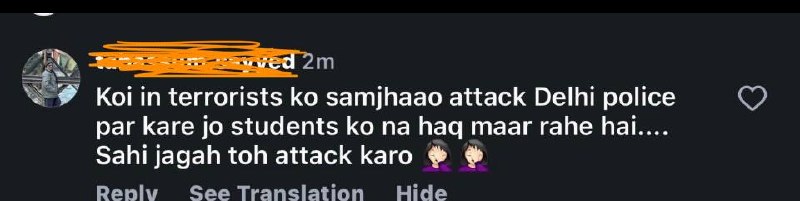
- What is the meaning of bringing a gun to a peaceful protest? Why does a student have a gun? What is the meaning of threatening to hit with the pointed side of the stone? What hasn’t CJP commented on this? Why has nobody in the opposition and all those protesting in the movement have not raised concerns on such inflammatory remarks on the nation?
- Why is Mr. Ranka spreading inflammatory narratives? Does he support the violence on both sides? Why should the government be in danger?
- How is assassination better than resignation? What will be achieved after killing a person? How does inaction justify assassination?
- If the institutions have eroded to the extent we need to start from scratch, why bring it now? What will be achieved after killing the police officers who are doing their job?
- What kind of values are been instilled in these youngsters by their parents? Is this the kind of crowd that should be allowed to participate in the movement? As the young generation, shouldn’t you question your parents on such extreme ideologies?
- How will disintegrating the parliament help in the cause of the students? Is this the sentiment behind the parliament march protest? What is the hypocritical approach towards the movement, where you criticize the government but also are ready to lynch it?
- If the government really was oppressive, how has this extreme sentiment prospered in the open like this and not been suppressed by the authorities in real time?
- What is the point of democratic and constitutional institutions if everything is to be ruled by the law of the jungle and the streets?
- I am sure their family and friends are proud of such protest and the language used to express that protest. If they really are, it also tells us a lot about them.
- Instead of registering your complains with people who are willing to rape, murder, behead and blow you to bits, consider complaining to the government directly who has provided for you and your previous generations
Legal provisions
- Article 19 of the Constitution, imposes reasonable restrictions on the freedom of speech and expression of citizens to maintain public order, security and sovereignty of India.
- BNS criminalizes incitement, or acts which threaten the national security, with punishments ranging to life imprisonment, or even death penalty.
Psychological aspects
- These videos show serious contempt for authority, along with refusal to engage in constructive dialogue
- Most of these incidents root from laziness to understand the consequences of their words and actions
- Some of these ideologies also originate from age-old contempt for authority and the urban people by various socio-economic sections of society, who believe that the government and the rich are there to exploit them and not coexist with them
- There is a possibility that the incitement of such sentiments is driven by a multi-layered campaign to ultimately sow seeds of dissent and doubt among the uneducated or vulnerable sections of society, creating more distance between the narratives and the truth
Vulgarity and abuse
All kinds of protestors, especially the youth, engaged in vulgarity in language and expression / action.
Evidence
My arguments
Does this behavior befit a student? Does it befit to do so on a public forum where millions are watching, of all ages and backgrounds? What message does it give to the younger audience, like the ones present in the protest? What kind of values are instilled in other students who might have issues to bring up with the government in the future? Is this what they were taught in schools for which they want reforms in education? Is this morally and ethically responsible behaviour on the protestor’s part, assuming that the government indeed is wrong in its working? How does vulgarity against the government support the cause of the movement?
Legal provisions
- Article 19 of the Constitution imposes reasonable restrictions on the freedom of speech and expression of citizens to maintain morality and decency
- BNS has provisions which directly covers hurling vulgar abuse, slurs, or aggressive insults at individuals (including public authorities) to humiliate them or provoke them into a violent reaction.
Psychological aspects
- Vulgarity is a stronger form of protest, showing frustration of the highest level
- Assuming the participants of such acts are aware of the legal implications of such expression, they indeed to draw out State’s action by increasing their numbers to see how far the State can really act against them
Property damage
Public and private properties were damaged heavily in the violence. This also affected livelihoods of various people involved, like auto drivers, taxi drivers, etc. Critical infrastructure like patrol cars and vans were also damaged extensively.
Evidence
My arguments
What was achieved through this utter indisciplined acts of vandalism and lawlessness? Everyone, including (and mostly) their parents pay taxes for this infrastructure, hopefully. Today you are destroying these assets which are meant for you, tomorrow when the government has to compromise on these same things because you keep wasting them and they don’t have the resources to keep replenishing them, you will come back and complain that the government doesn’t do anything to ensure your security. Paying taxes doesn’t mean you will destroy something that belongs to everyone. If you are a responsible taxpayer, then be a responsible citizen and help maintaining order as well. If you are not a taxpayer, you have no right to even consider damaging this property.
In video PD1, the driver is visibly distressed by the fact that his only means of livelihood is damaged. The spectating crowd condescendingly dismisses his concerns by saying that students are genuinely protesting and fighting hard, which may be true. It doesn’t validate the fact that the driver will most probably be out of business for at least 4 days, and will be paying out of pocket for a problem he didn’t create, but rather did his work with full honesty, driving people to such locations where hostilities were possible, and paying a heavy prize as possibly the sole earner of the family. Each and every person in that video just gave up and strongly defended the students, which is great, but what about this person who has nothing to do with this? Why did he have to pay the price? What about the cab driver at video PD4, who had his entire window broken while the passengers were still in there? Lady passengers, mind you.
Legal provisions
- Article 19 of the Constitution allows the citizens to assemble and protest in a peaceful manner.
- Several provision of BNS provides for punishing nuisance and disturbance in public order, potential harm to others and disruptive harm to public facilities.
Psychological aspects
- By doing such attacks on public and private properties, the protestors could be trying to draw attention of the government.
- It is possible that the crowd has certain mentally challenged individuals who don’t understand that harming private property, like petrol pumps, can cause much greater harm, involving harm to life as well
- It is possible that by defending such attacks, some protestors want to put their cause at a pedestal, thinking that the ends justify the means
Violence against police
Evidence
My arguments
- The police is supposed to have protective gear like helmets, vests, etc while rioting, why are some of the officers endangered with the lack of such gear during these protests?
- The Nihangs initially joined the protests to protect the students, but they started to side with the police later. Why did they do so, and why did the police not take action against them when it is illegal under various laws to carry such weapons in designated protest sites?
- Most of the times, the police did laathi charge when their colleagues were in danger due to the mob lynching, why was this not condemned by the CJP leadership when it happened in front of their eyes?
- Most of the officers who were assaulted are middle aged or older, who is responsible for their condition?
Legal provisions
- While it is allowed for certain officers, like those who belong to intelligence department, to be present in the crowd without proper uniform, it is also mandatory for police officers to have identifiers on themselves to help identify during crowd dispersal actions.
- Various sections of BNS, BNSS, BSA and various other legislations have identified mob lynching, assault on public officials and attempt to murder as punishable offences, with punishments ranging up to life imprisonment in some cases
Psychological aspects
- Under such stressful conditions, it is possible that the tactical discipline of officers might be broken and they resort irresponsible behaviour while dispersing the crowd
- Most of the people who instigated the violence were history-sheeters who have been systematically identified by the agencies and are under investigation for their involvement in a bigger conspiracy. Such people must’ve created an atmosphere where students were misled to believe that it is okay to assault officers in the name of protests
Other Related News and Narratives
Anantnag terror attack
There was an attack on one of the security personnel in Anantnag, Jammu and Kashmir by terrorists. In response, several civilians suspected to be OGWs were detained and questioned by the authorities for the links suspected with Pakistani organizations such as Lashkar-e-Taiba. It is believed that the terror outfits are following a renewed MO by targeting security personnel who are vulnerable and in sensitive areas, like the Amarnath Yatra route, to spread terror among the citizens and pilgrims, while also spreading distrust in the institutions. However, some people on the internet think of it as a facade and go to any low to call it out on social media.
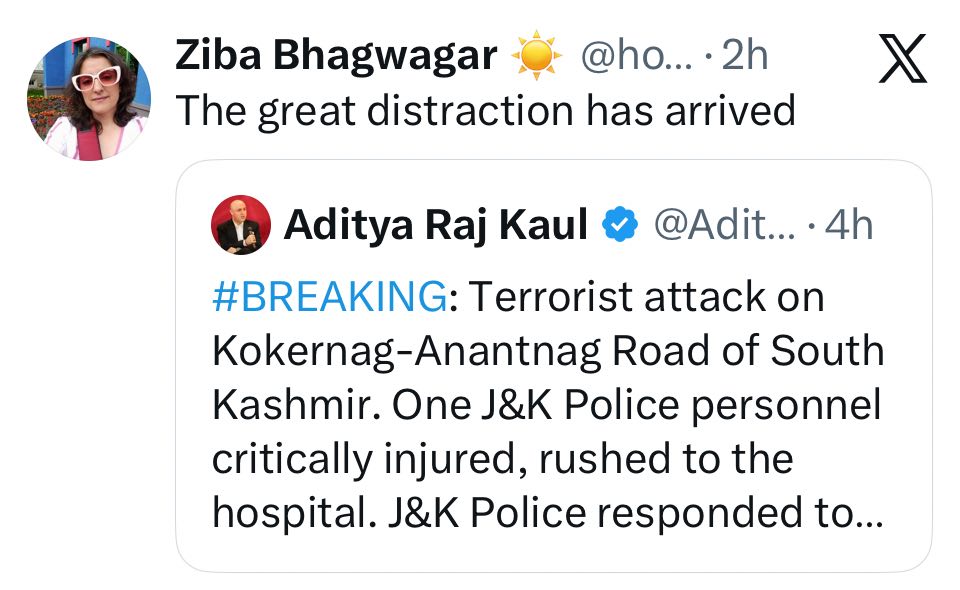
A note to such commentors – just because a lot of things are happening in parallel, doesn’t mean everything is a distraction. India is a big nation with a variety of issues that are been dealt with every single day, something that obviously escapes someone’s understanding when they think that the whole world revolves around just one issue. Be mindful about what you talk about, and if you don’t know what you are talking about, then scroll on instead of spilling garbage.
P.S. based on the directives of the government, the details regarding the shootout were not posted here.
Guns aimed at protestors
There is a clip from the Sansad Bhavan itself where the security personnel from CISF are getting armed and ready to fire at the protestors with live ammunition. It is indeed true to protocol and has nothing to do with “authoritarian fascist” regime of government. Recall how the security protocols were tightened after 2001 terror attack, and have various layers depending on whether the parliament is in session or not. Having gone through the evidence so far, let’s paint a scenario. A mob is heading towards the parliament which contains elements that want to cause harm to the heads of the State. It is not clear whether the protestor has a positive intent of putting forward their demands in a reasonable manner, or are equipped with weapons capable of causing death to a person. In such a scenario, what is the security force supposed to do when they see a mob marching forward with visible fury? Is it supposed to check each and every of those 1000+ protestors before letting them enter the parliament? Should they get a MoU signed with each of them where they will guarantee that nobody will be harmed and they will quietly come back after lodging their protests? Some people will answer yes to these questions and I would encourage them to seek professional help for their mental health. A mob is just unpredictable as it has been so far. A mob has no positive or negative intent, it follows the waves of emotions as they come, and it is very dynamic in nature. The guns were locked, loaded and AIMED only within the parliament’s premises to ensure nobody enters the building in an unauthorised manner in the event of the barricading failing at the gates of the complex. Even before considering spraying bullets, they are mandated to try non-lethal means as far as possible, but they are not restricted to using lethal means to disperse the crowd. Remember, the intention is to disperse the crowd, not kill people, or suppress democracy. The orders to do so are not given by any political leader, but by executive officials of the agency responsible for overseeing the security of the place. Making baseless and uneducated arguments that this is suppressing democracy can be understood using the following argument. If someone is visibly threatening to kill you and rob you by entering your house, you should allow it in the name of justice because that person has been marginalised by the likes of you, and by letting them kill and rob you, it will ensure that justice is delivered to them and their freedom of expression is exercised where they express their complains with the society. Doesn’t sound right? I wonder.
Resignations
The hottest topic and demand is resignation. For everything, people are demanding resignation, regardless of the issue. The primary suspect was Dharmendra Pradhan, the education minister, but it slowly extended towards Amit Shah, the home minister, and Narendra Modi, the prime minister, as well. It is very convenient how after receiving the resignation, the narrative change to the fact that slowly the actually want to make the entire cabinet, including the prime minister, resign. The ulterior motive still remains the same. Regime change. Instability.
However, I ask a very fundamental question. What is achieved by making people resign forcefully? I remember when such incidents happened in Bangladesh earlier when the minority community was been prosecuted by the mobs. One such incident that I remember clearly was the mob breaking into the office of several professors and teachers from the minority communities and making the resign forcefully.
This incident makes you wonder, was it just a hate demand, or a necessary demand, given that most of these protestors did want to implement the Nepal and Bangladesh model of regime change.
The Andhbhakt banter
It’s true, both the left and right side of the debate are incredibly dumb. Both will have valid arguments, but will lack the basic courtesy and conduct of a debate for those arguments to prosper. Sometimes, it is the intellect that is lacking. Fact of the matter is, all things considered, it was never a win for the actual cause. The actual cause will die out in a few months to come, and whatever will remain will be the pained memories of the confrontations faced by both the citizens and the government in the name of democracy.
One thing worth noting is that left always smears the right for bringing up external involvement in such situations. While it is indeed ridiculous to keep claiming that external forces are acting against the national interest, let’s examine the practicality of the said claims. It is not possible for any movement to live for long without funds. You need funds to ensure that the focus of the stakeholders, including the key leadership, is entirely on the movement itself. This is ensure by funds because they need basic amenities like food, clothes and shelter, all of which requires money. To mobilize the masses for such protests, they need to make arrangements to ensure good participation as well. To boost their public image, they also need to run ad campaigns to increase their coverage through artificial means. To maintain some active and good quality volunteers, they will need to bring in money eventually as well. To litigate, they will need money for lawyers eventually. Assuming most of this is taken care of politically, then there is not much of a problem, because it has become a political movement too by then. However, the legitimacy of funds that reach from the very top to the bottom, must be questioned and investigated. It is not new for external intelligence agencies to utilize their funds and assets in mobilizing the masses for their agendas, particularly when it concerns their own national interests conflicting with another country. India present conflicts to the national interests of several countries across the globe with its geopolitical stance. It wouldn’t come as a surprise to anyone that indeed, the U.S. is directly affected by India, which has been openly been advocated by their own officials and leadership time and again as well. The presence of CIA in Bangladesh, Myanmar, Pakistan, is not a coincidence. However, I will let the reader decide based on their own understanding of geopolitics, as it is a large topic in itself and is out of the scope of this article. Please do keep in mind, I am not saying that Sonam Wangchuk or anyone from CJP is a foreign asset or whatever, I am saying that somewhere, somehow, from a distance, there is indeed some involvement of shadow actors who are steering everything in their favor.
Another issue is of the religious (Hindu-Muslim) divisive politics. It is true that it is very easy to blame the sides when both have blood on their hands. It is also critical to understand and appreciate the distinction and the efforts made to subdue radicalization. Bangladesh saw violence and persecution of minorities, and it is not something that is new to it. The seeds of radicalization have germinated and grown into a larger mob movement. The same issue has translated on the Indian soil through porous border and demographic instability. I am not saying that a particular community should be persecuted. I acknowledge the fact that both the Muslims and Hindus contributed towards nation building, and both sides have also been accused of tyranny in some cases as well. The Islamic radicalization is the key problem, so is the Hindu radicalization in many aspects. Only by combating such polarization, we can achieve public harmony and discourse on matters which require collective participation. While it is important to not make things communal, it is also very important to identify and address the issues which are genuinely wrong and affect everyone.
Threat to democracy and the constitution
The opposition very gladly uses the catchphrase that the constitution is under threat, the democracy is under threat, so far as to go to the foreign countries and talk about it with no substance in their arguments. Most people would think it’s true, because it has been staged in such a manner, but the reality is, if the democratic values were under a threat, the stability of the country would be under a threat, and that would reflect in its geopolitical dealings. Today, India has various FTAs and multilateral dealings with countries, ranging from EU, US, Australia, New Zealand and everything in between. India is attracting foreign investment despite the recent tension with the US and the global instability caused by disruptions, which in itself is a testament of how stable our government is perceived in the outside world. The recent oil and gas issues propagated by the West Asia conflict were also dealt with gracefully with proper institutional safeguards and government intervention, which enabled India to have one of the lowest prices for LPG as compared to the global average. It is true that some measures taken by the government have been highly controversial, but it has touched upon the most practical aspects of governance as well, that too, through democratic and constitutional processes.
The government has a lot of scope in improving its democratic and constitutional ideals, while it is also a leading example globally in some others. It would be incorrect to always pin the blame aimlessly and hope it lands the spot sometime.
Watch this reel for instance:
I do respect the child’s privacy and opinions, but I wonder, if all that she is doing is asking questions, whatever happened to RTI where you ask question and get answers from the government? The problem is that people think since the government didn’t respond according to their demands, it never will. To create a whole narrative out of this and escalating this protest to dangerous levels, based on the premise that they are “just asking questions”, we already saw what happened to people who were “just asking questions”, only when the questions were too uncomfortable for the people to answer at the time. My bad, the people were too uneducated to answer those questions at the time. Making a fool of this kid in the name of protests, pushing such children and women in front to face the lathi charge, while men like those in the background of this video pelt stones on the security forces, is a tactic that has been followed since ages by OGWs in the Kashmir valley. This multi layered tactic to protect the jihadis who would either attack the security forces, or the civilians in the name of freedom would be followed every time the forces came to get them. Thankfully this has changed in recent times as well, but surely the perpetrators haven’t.
Women empowerment and safety
Take a look at this:
Two things are happening here: the woman trying to stop the police van is portrayed as an empowered “diva” who is fighting an oppressive state. The second frame compares the situation with what happened at the Tiananmen Square, the specific photo is of the “Tank Man” who stood in front of the authoritarian regime of China at time for pro-democratic protests, in which hundreds of people were killed by the government. However, this is nothing new in China since it is known for been oppressive and these images are still banned by the government till date.
However, my concern comes, when the women participating in the narrative are painted as divas, what about the women who were doing their jobs? The independent journalists who were harassed and assaulted by the mobs, the female officers who were also harassed and assaulted by the mob, and later on by the social media warriors who posted these pictures and narratives. Is this the true meaning of women empowerment, where you politicise and weaponise the term and its meaning, but when it makes you feel uncomfortable, you turn a blind eye and justify the wrongs? If government is asked to take accountability for its failures, when will the citizens be accountable for theirs?
However, take this video for instance.
This video shows that the police personnel who hit the woman with the laathi were exchanging smiles. While it is understandable that it might have made the women uncomfortable, the fact that the issue was raised and it has reached the authorities for investigation and it is critical to cooperate with them to ensure swift justice.
International protests and methods
There was a talk about the “No Kings” protest that took place in the U.S. earlier. People mentioned that it should idealised because the people had a similar manner of protesting, where the protested in front of the White House and was seemingly a peaceful protest. They miss the fact that the organisation and conduct of the protest was genuinely peaceful and much further from the White House itself. Secondly, other cities did indeed face non-lethal means of crowd dispersal by the authorities because of flash points, where they even used tear gas to push the violent mob back.
Let’s assume for a moment that the mob at Washington also showed the same amount of rigour as shown in Delhi. The response would’ve been much stronger, if not as strong as the Delhi administration’s, for the simple reason that no country tolerates violent protests near its institutions which may pose a threat to the sovereignty of the nation.
Another argument I saw was that Geneva convention has declared the usage of tear gas as illegal. I agree, but Geneva convention has clarified that while tear gas in war zones is illegal, it is allowed under certain conditions in civil applications, like crowd control. There are international guidelines and regulations related to human rights which govern this topic, and India has implemented these guidelines accordingly.
Other irrelevant issues
See this post:
How is Umar Khalid and the Kashmir issue relevant here? Wasn’t this a protest for the students and their affected families? Wasn’t this about accountability of the government in matters of national importance? Why are we discussing about a terrorist who wanted parts of India to be cut to pieces and annexed by other states? Why are we discussing about a state which has been administered by the government as it seems fit and is making progress everyday in terms of infrastructure, economics and security? What is there to discuss about these topics?
Protestors were dispersed using non-lethal means, the perpetrators of the ones who were sexually assaulted will be brought to justice. Everyone is been investigated, a single community is not targeted, the investigative agencies are not dumb to not investigate things. If the intention to do all this was to instil fear, then the police has every right to investigate you and your followers and their intentions in any way it seems fit. This is not my opinion, this is the law.
Praising the government
One argument that is thrown around, is that why should we appreciate the government when we as citizens pay taxes. The government is supposed to work for us and the good work that they do doesn’t deserve medals, and it is only fair to ask for accountability and reward the government by keeping them in power. This is true, the government is indeed a democratic when it is by the people, for the people and of the people, but what about the people themselves? By saying that you pay taxes and elect the representatives to do their job, aren’t you reducing yourself to a mere machine whose job is to pay money, cast a vote and raise an error when you encounter a problem? Whatever happened to participatory democracy where the people participated with the government to govern themselves?
Don’t praise the government, they don’t need the praise anyway, they ask for criticism and they get loads of it. What they don’t get is the respect for running this big of a country, and handling every section of society, whether good or bad, and do its job anyhow despite every challenge that comes its way. There is a need of compassion, cooperation and patience within the citizens when it comes to governance, because that is how the government itself tries work in a democracy.
My Recommendations
Having gone through so much information and analysis, it is important to have way forward and not dwell into a void of mistakes and issues.
For protestors
- Be intellectual and proactive regarding your movement, don’t let it get hijacked like this, know what you are fighting for and WHO you are fighting it with
- If you don’t like the current government, stop thinking about overthrowing the institutions, join politics and develop the country in your own vision. Learn from the likes of Mr. Lee Kuan Yew, who revolutionized and established a better state using the principles, character and clarity.
- Just because someone started the protest, doesn’t mean they will carry it on. If you think it can be handled in a better way, take the lead. Don’t become silent followers.
For authorities
- Due to various reasons, there is a serious erosion of trust in the institutions. In order to revive trust, it is imperative that the institutions practice transparency, and counter fake news at the earliest with solid facts
- Develop more non-lethal methods of dispersing crowd like stink bombs to avoid collateral damage for people on both sides
- Authorities should necessarily take action against perpetrators identified over time, they should have rehabilitation programs which intellectually probe and clarify the role of the government, which clears any misunderstandings among misled individuals and give them a chance to lead a better and more informed life
- Identifying and taking actions against rogue actors is critical, as they will definitely cause harm in the future. When rehabilitation fails for these people, it is important to penalize them according to the appropriate law
For spectators
- Don’t believe everything that comes through the social media blindly. Take a moment to learn all the facts, analyze and then form an opinion. Your actions have direct consequences in the momentum of the movement, and if you act based on narrative driven news, the harm is inevitable.
- Blaming and pointing fingers is easy, taking action is difficult. Ensure that if you find someone falling prey to false or extreme news, you should correct it. Have faith in the official channels of communication and redressal. Raise your opinions in a responsible manner
For Government of India
- Consider early detection and early remediation of such issues through dialogue and diplomacy. Consistent efforts from the administration side gives faith to the people that they are been heard. Spectating and regulating from a distance means very little when it can’t be seen by the masses.
- Have clear communications with the citizens. While PIB and other sources of news are great for official purposes, there should be outreach via other branches of the administration as well, all the way from district level up to the secretariat, which allows people to engage directly and understand the nuances of the developments taking place with respect to such matters.
- Promote participatory democracy. The educated youth have significant potential, and by engaging with them in a meaningful manner on a regular basis, it allows for a variety of opinion, as well as understanding of the issues affecting the society. Ensure that these proceedings also are communicated with the public to increase trust, transparency and accountability.
Closing remarks
It has indeed been an educational experience for every stakeholder, and I hope that this article did justice to that. It is important for the reader to appreciate the nuance and develop an objective view of the situation for what it is and engage with everyone in a meaningful manner. Just like the constitution provides us with fundamental rights, it also confers us some fundamental duties that we shall perform as citizens of this great country. Don’t let psychological warfare affect you, retaliate when you see one. Democracy is not under threat, neither is the Constitution of India, until and unless we let it, by falling prey to such issues.
The institutions and authorities are there to serve and protect us, cooperating with them is not an act of shame, but an act of maturity. If you don’t like the system, get into it and fix it. Don’t become a proxy of someone else’s hate.
P.S. The article has been cut short (despite been so long) while respecting the views of every section of the society. Most of the arguments and videos are already available on the social media for people to browse. This article aimed at highlighting certain aspects which might stay unseen by the majority of the people. Please bring in your perspectives in a meaningful and constructive manner. A lot of time was spent on this article, please do justice to it by READING IT ENTIRELY TILL THE END. Each and every comment on this article will be displayed for the public, so please drop your comment here itself if you intend to engage in meaningful discourse. Use this as a platform for a healthy intellectual discussion.
One response to “New Delhi and Cockroaches Part 2: Clearing the Air”
Namaskar
Glad you read through my article. Please do read this article by another author, show your support as most of the points which were missed out in my articles have been covered here.
https://www.globalorder.live/post/beyond-the-baton-why-the-jantar-mantar-episode-demands-a-policy-review-not-political-polarisation